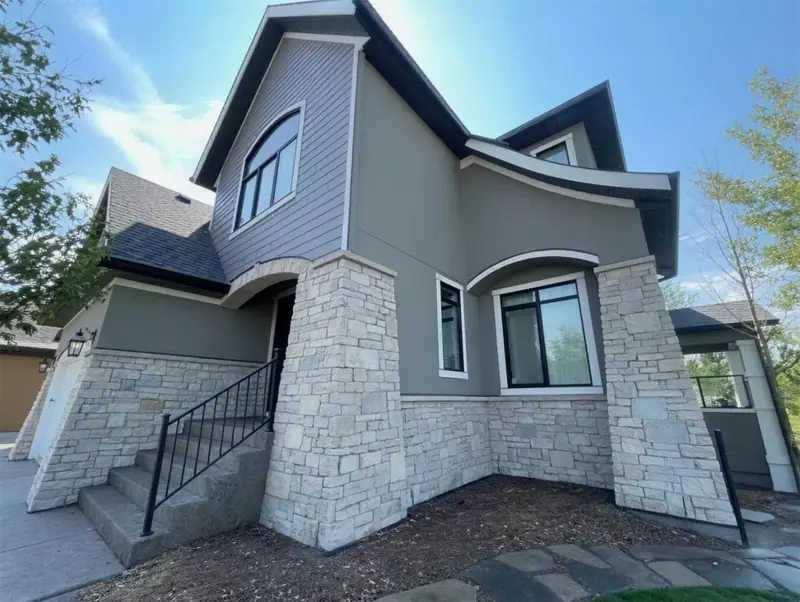
Woodpecker damage on EIFS in Calgary
Woodpeckers drill into EIFS and stucco all over Calgary. We repair the holes, rebuild the foam and help stop the damage coming back.
Woodpecker damage on EIFS is a common call in Calgary, especially in spring. The birds drum on the hollow-sounding foam, break through the thin finish and leave holes that let water and insects into the wall.
We repair the holes, rebuild the foam and finish, and help you stop the bird coming back.
Signs of woodpecker damage
- Round holes, often in a row, high on the wall or under the eaves
- White or pink foam showing through the finish
- Drumming or tapping on the outside wall, usually in the morning
- More holes, or bigger ones, every spring
- Bits of foam and finish on the ground or the deck
- Holes near corners, trim or the top of the wall
Why woodpeckers go after Calgary houses
EIFS is foam insulation behind a thin finish. When a woodpecker taps on it, it sounds hollow, which to the bird can mean insects or a place to nest. Drumming is also how they mark territory in spring, and a wall that echoes is ideal for it.
Plenty of Calgary homes have EIFS or acrylic finishes up on the gables, right where woodpeckers like to work, and houses near trees and green space see it most. Once a bird finds a wall it likes, it tends to come back to the same spot.
How we repair woodpecker damage in Calgary
- Inspect every side. We check all the walls, not just the hole you've seen. There are often more, higher up or around the back.
- Cut out the damage. Each hole is cut back to clean, solid foam, and we check for water, nests or insects inside.
- Rebuild the foam. New insulation board is fitted into the opening and rasped flush with the wall.
- Mesh and base coat. Reinforcing mesh and base coat go over the repair so it's as strong as the rest of the wall.
- Finish and colour. The finish is textured and tinted to match. On a faded wall we may suggest recoating that face so the patches don't show.
- Talk protection. We go over ways to keep the bird away.
What affects the cost of a woodpecker repair
Woodpecker repairs are priced on how many holes there are and how hard they are to reach:
- Number and size of holes: a few small holes, or a section that's been torn apart.
- Height: most damage is on the second storey or the gables, which means ladders, a lift or scaffolding.
- Damage inside the wall: wet foam, nests or insects add work.
- Colour match: a faded finish may need that wall recoated to blend.
- Season: EIFS finishes need above-freezing weather to cure.
Text us a photo of the holes for a quick idea before the free estimate.
EIFS work
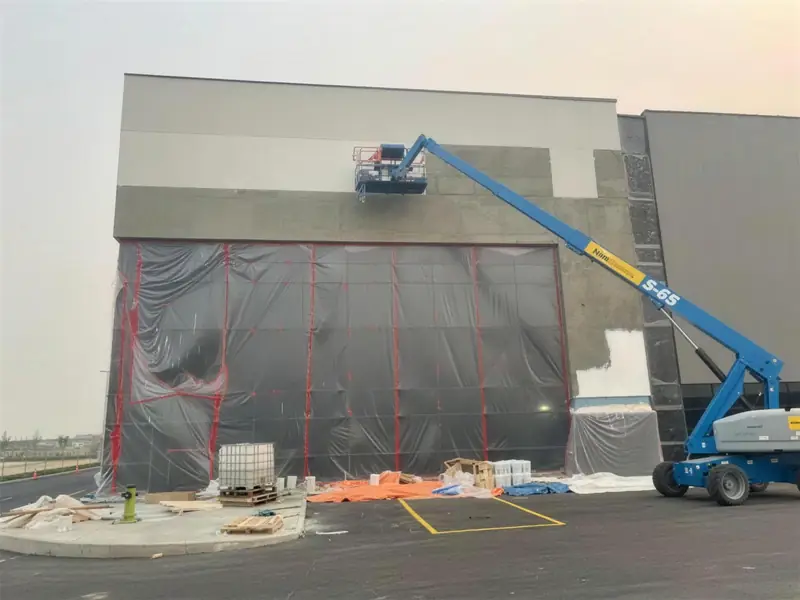
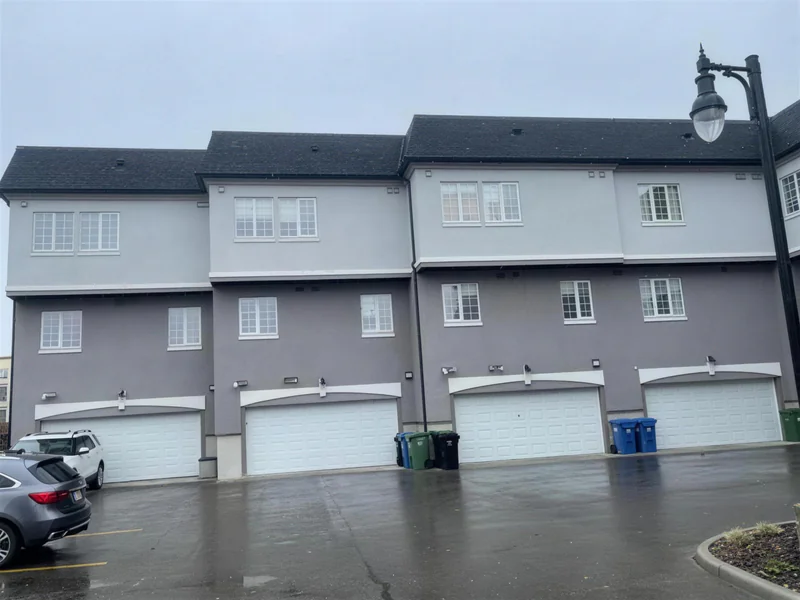
Two jobs from our gallery with EIFS and acrylic walls like the ones woodpeckers target. For a full EIFS or acrylic job, see EIFS & acrylic stucco. For cracks and other damage, see stucco repair. Woodpecker calls come from all over the city, as the Calgary page explains.
Where we do this work:
Woodpecker damage on EIFS questions
Will the woodpecker come back?
They often return to the same wall, so we'll go over protection options at the estimate.
Is it covered by insurance?
Depends on your policy. We can give you a written quote and photos for your insurer.
Is woodpecker damage urgent?
More than it looks. An open hole lets rain, snowmelt and insects into the foam, and birds or other animals can start nesting inside. The sooner it's sealed, the smaller the repair.
Can you repair it without the patch showing?
The new finish is textured and tinted to blend with the wall around it. On a wall that has faded in the sun, a fresh patch can still show, and we'll tell you if recoating that face would look better.
Do woodpeckers damage regular stucco too?
Less often. Traditional cement stucco is hard and doesn't sound hollow, so most of the damage we see is on EIFS and foam trim.
Can I just fill the holes myself?
Caulking or spray foam leaves a soft spot the bird can open again, and it won't match. The foam has to be rebuilt and covered with mesh and base coat to last.
Request sent
Thanks. Zere will call or text you back today. Urgent? Call (403) 617-2955.